
#ThinkLanguages Week 2026 kicks off
#ThinkLanguages Week 2026 kicks off
#ThinkLanguages Week 2026
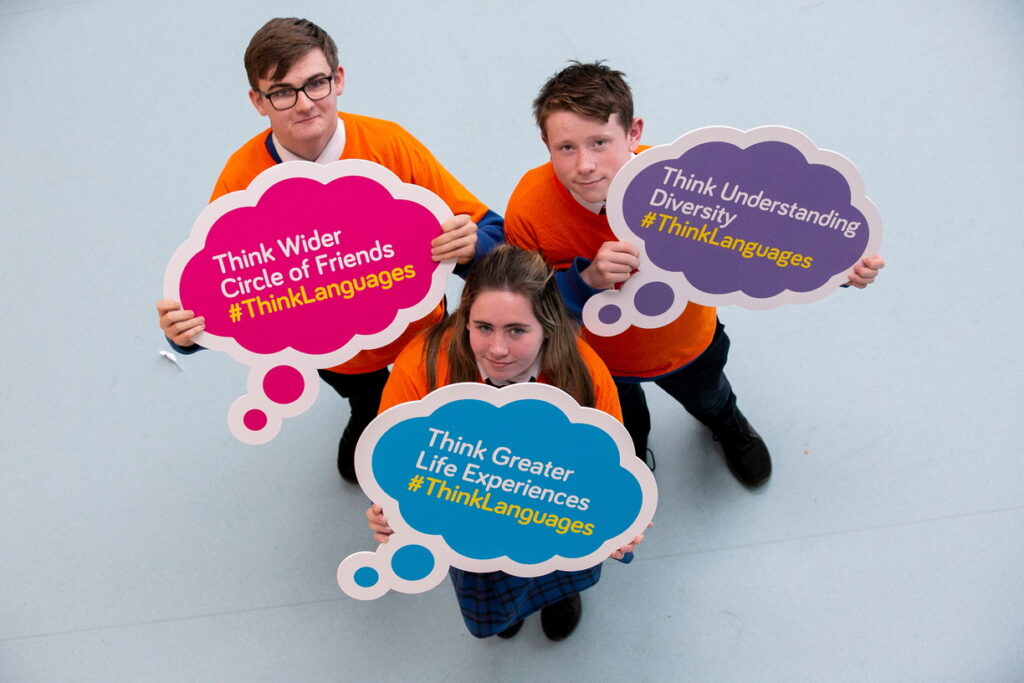
Over 19,000 students from more than 220 post-primary schools across Ireland are taking part in a national celebration of #ThinkLanguages Week this week. Now in its ninth year, this celebration of languages, cultures and international engagement has been recognized as an Associated Event of Ireland’s Presidency of the Council of the European Union 2026.
The event encourages young people to explore the personal, cultural and career opportunities that language skills can provide. Schools are hosting an array of activities, such as language-based workshops, cultural events, quizzes, guest speakers, film screenings and more!
Associated Event
With Ireland currently holding the Presidency of the Council of the European Union, this year’s #ThinkLangauges places particular emphasis on multilingualism, cultural understanding and opportunities available to young language learners across Europe.
The Department of Foreign Affairs involvement for a third year is especially relevant in light of the Presicdency with their support for ThinkLanguages Week through their A Career for EU Strategy, emphasising the significance of language skills in a European context. As part of this initiative, six lucky students as part of the #ThinkLanguages Champion Team, and two teachers, will win a trip to Brussels to experience the multicultural vibrancy of the city and discover what a career in the EU could look like first-hand.
Partners
This year Languages Connect is collaborating once more with several partners, including the Irish Film Institute, the Department of Foreign Affairs, Cultural Institutes, Europa Experience and universities across the country.
The Irish Film Institute are hosting screenings of foreign language films throughout the week in regional partner cinemas across Ireland, encouraging students to think of languages outside of a classroom context.
Universities across the country are also participating in the event, inviting students onto their campus to gain an insight into the life of a language student. Many are also running language-based workshops as well as making student language ambassadors available to those schools unable to visit.
Cultural Institutes are hosting onsite events, provide workshops, guest speakers, online resources and more!
This year, Europa Experience has been welcomed on board as a partner for the first time! Participating Transition Year students have the opportunity to discover how European democracy works, how MEPs make decisions, and how policy impacts daily life, all while experiencing the EU’s rich linguistic diversity.

Speaking about this year’s celebration, Minister for Education and Youth, Hildegarde Naughton, said, “As Ireland holds the Presidency of the Council of the European Union in 2026, #ThinkLanguages Week provides an important opportunity to celebrate the many benefits of language learning and to encourage young people to look beyond borders and engage confidently with the wider world.”
“Learning a language is about much more than communication. It broadens horizons, deepens cultural understanding and equips students with skills that can open doors to further study, travel, employment and international opportunities throughout their lives.”
Students look forward to a week of interactive workshops, foreign language films, guest speakers, and campus visits. They will explore how foreign languages open doors to global opportunities, personal growth, and cultural connection. Karen Ruddock Director Post-Primary Languages Ireland which facilitates #ThinkLanguages Week said: “#ThinkLanguages Week shows young people that languages are about far more than exams. They are about opening up opportunities in the world of work and supporting wellbeing, as well as developing capacity to communicate across cultures.
As an official Irish EU Presidency Associated Event, this year’s celebration highlights the important role languages education plays in facilitating Ireland’s engagement with Europe and the wider world. We are pleased to work also with the Department of Foreign Affairs and A Career for EU to help students see how language skills can support European pathways in their futures, including careers connected to EU institutions and international engagement.”